
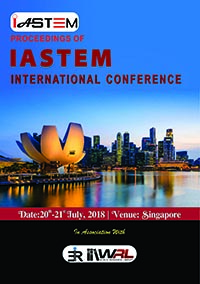
127TH IASTEM INTERNATIONAL CONFERENCE
Singapore 20-07-2018
9 papers
-
Evaluation of Thailand Rajabhat University Website Content based on Webometrics
Piyalak Pongtawevirat, Lalita Santiworarak
Paper ID IA-ICRAETSNGPR-20078-8997 · Pages 1-4
Download PDF: Evaluation of Thailand Rajabhat University Website Content based on WebometricsAbstract
Nowadays, important online tool which present organization is website. Content on website is the most key to communicate between organization and user who travel on the site and educational institution too. Moreover, university also use website to exhibit their information to outside for display course, activities and other in their campus. Therefore, website university ranking is significant thing to focus. Webometrics ranking of world university is the ranking of website educational institution, they emphasize about user accessibility of website. In this paper, we study about university website user, top 10 and bottom 10 of Thailand rajabhat universities ranking and Webometrics visibility indicators. This article aims to evaluate the average times which user use in website, total of non-unique visitors of website and percentage of bounce rate of Thailand University’s website which ranked in Webometrics. The result should help website’s administrator manage their content and It may help them to move up their site in Webometrics Ranking of World Universities too. Index Terms - Webometrics; Website Visibility; Bounce Rate; Website Content; Content.
-
Social Capital and Flourishing of Left Behind Children in Rural China
Sijia Guo
Paper ID IA-ICSSHSNGPR-20078-8420 · Pages 5-11
Download PDF: Social Capital and Flourishing of Left Behind Children in Rural ChinaAbstract
With dramatic change in China since the 1970s, industrialization and urbanization there have been progressing rapidly. This has been causing the most massive internal migration in human history. Due to this mass migration, many children of the migrants become left-behind children (LBC) in rural Chinese area. LBC are numerous and this has raised attention from various perspectives. Most of previous literature focused on the negative aspects of LBC, such as mental health symptoms. In contrast, this study aims to shift the focus from negative aspects to strength and protective factors. Herein, this study takes two steps. First, this study conducted a pilot study through semi-structured interview. Five interviewees shared their LBC experiences and feelings, revealing some protective factors, including social capital. The next step built on the results of the first step, surveyed children in Liaoning Province to examine the relationship between LBC and flourishing, and its mediation by social capital. Analysis of survey data obtained from 520 LBC and 475 non-LBC showed that LBC showed lower flourishing than were non-LBC. Importantly, this difference diminished after controlling for social capital. That is, social capital functioned as a mediator. Overall, the study adds some empirical findings about LBC. Keywords - Left-behind children; Social capital; Flourishing
-
Marketing Strategy Management and Development of OTOP Products SMEs Business: to Compete in the ASEAN of the Community Enterprises in Chumphon Province, Thailand
Toitula Narksakul, Chamni Jaipradidtham
Paper ID IA-ICSTMSNGPR-20078-7515 · Pages 12-19
Download PDF: Marketing Strategy Management and Development of OTOP Products SMEs Business: to Compete in the ASEAN of the Community Enterprises in Chumphon Province, ThailandAbstract
This paper presents the management of marketing strategies and the development of OTOP product SMEs business. To compete in the ASEAN of the community enterprises group in case study Chumphon province, in Thailand. The objective of this study was to investigate the market conditions and develop an OTOP competition strategy. Qualitative research was used in this study. The research paper instrument, in-depth interview from entrepreneurs, was used to collect the data which were analyzed by using PRIMO-F model in the part of the context within an organization. PEST analysis, and SWOT analysis were used in the external environment of SMEs business. TOWS matrix technique was used in the operation of market strategic business planning, was used in data determining a measure with the success of the implementation of strategies. The population for this research was 495 sample entrepreneurs of OTOP. Data were collected by using questionnaire. Descriptive statistics were used in analysis were percentage and weighted score. The research results found that strategic marketing mix 4Ps management: such as product, place, promotion and price, respectively. The strategic marketing of OTOP products management in SMEs had positive effect on competitive advantage in changing economy of the community products for SMEs business in Chumphon province, Thailand. Index Terms - Marketing strategy, promotion, management, SMEs business, OTOP products
-
The Study of Relationship between Personality and Content format on Learning Web Application
Lalita Santiworarak, Benjamaporn Suthirawut
Paper ID IA-ICSTMSNGPR-20078-9104 · Pages 20-22
Download PDF: The Study of Relationship between Personality and Content format on Learning Web ApplicationAbstract
Personality analysis is a grouping of individual differences behaviors consist of ideas, feelings and actions and that behaviors shows characteristics of person and action of them. Theory of personality should define deportment of them. Personality assessment results effect to person behavior such as internet using time, website information perceptions. Then, the objective of this article is study relationship between personality and behavior of them about learning content type which they like to use in learning web application. Index Terms - Personality; Big Five; Behavior; Content; Learning Content.
-
Study on Anti-Inflammatory Effects of Embelin in Asthmatic Human Airway Epithelial Cells and Tissues
In-Seung Lee, Hyeung-Jin Jang
Paper ID IA-ICMBPSNGPR-20078-8858 · Pages 23
Download PDF: Study on Anti-Inflammatory Effects of Embelin in Asthmatic Human Airway Epithelial Cells and TissuesAbstract
Allergic asthma is the most common type of asthma and is defined as a chronic inflammatory disease of the lung. In this study, we investigated whether embelin (Emb), the major component of Ardisia japonica BL. (AJB), has anti-inflammatory effects on allergic asthma via inhibition of NF-κB activity. Inflammation was induced in A549 cells, a human airway epithelial cell line, by IL-1β (10 ng/ml) treatment for 4 h. The effects of Emb on NF-κB activity and COX-2 protein expression in inflamed airway epithelial cells and human asthmatic airway epithelial tissues were analysed via western blot. The secretion levels of NF-κB-mediated cytokines/chemokines, including IL-4, 6, 9, 13, TNF-α and eotaxin, were measured with a multiplex assay.Emb significantly blocked NF-κB activity in IL-1β-treated A549 cells and in human asthmatic airway epithelial tissues. COX-2 protein expression was reduced in IL-1β-treated A549 cells and asthmatic tissues after Emb application. Emb significantly reduced the secretion of IL-4, IL-6 and eotaxin in human asthmatic airway epithelial tissues by inhibiting NF-κB activity. The results of this study suggest that Emb may be used as an anti-inflammatory agent that inhibits NF-κB and its related cytokines.
-
Isolated Protein of Astragalus Membranaceus Acts as an Allergen by Binding Human Immunoglobulin E on Human sera
Kang-Hoon Kim, In-Seung Lee, Ji Young Park, Yumi Kim, Eun-Jin An, Hyeung-Jin Jang
Paper ID IA-ICMBPSNGPR-20078-8860 · Pages 24
Download PDF: Isolated Protein of Astragalus Membranaceus Acts as an Allergen by Binding Human Immunoglobulin E on Human seraAbstract
Allergy is nearly always triggered by protein molecules and the majority of individuals with documented immunologic reaction to foods or plants IgE reactions. However, proteins derived from herbal medicine act as an allergen is unknown. In this study, we aimed to confirm if herbal medicine, Astragalus membranaceus, at proteomic level may contain to trigger the immunoreactivity of IgE. If it does, what components of protein molecules in herbal medicine, Astragalus membranaceus, is react to a binding IgE. In order to resolve this hypothesis, we performed proteomic tools, SDS-PAGE stained coomassie blue and identified protein by LC-MS/MS. Also, we tested plasma IgE reactivity on an isolated protein of Astragalus membranaceus using western blot of human IgE and enzyme immunoassay panel, Allergy-Q test in 400 patients. Through the described performances, we could select four sera of positive candidate and identify Astragalus membranaceusIgE binding proteins. Our data suggested that herbal medicine, Astragalus membranaceus was possible to act an allergen by identify IgE binding protein with isolated protein of Astragalus membranaceus.
-
Therapeutic Effects of Yongdamsagan-Tang on Autoimmune Hepatitis Models
Jiyoung Park
Paper ID IA-ICMBPSNGPR-20078-8890 · Pages 25
Download PDF: Therapeutic Effects of Yongdamsagan-Tang on Autoimmune Hepatitis ModelsAbstract
Autoimmune hepatitis (AIH) is one of the immunity disorder disease that is resulted from that antibodies of own liver tissue are attacked by activated-immune cells, which is obviously unknown cause. Recently, numerous researches in autoimmune diseases have been studied and reveal that increased plasma IL-17 trigger multiple inflammation and disorder. Yongdamsagan-tang (YST), a mixture of 11 herbal extracts, is known in traditional Korean medicine and widely used for treatment of inflammatory diseases. In this study, to confirm the effects of YST on treatment of autoimmune hepatitis (AIH), a variety of extracts about YST plus Gentiana scabra (GS), which is main ingredient of YST, compare the anti-inflammatory effect on NO production in stimulated macrophage cells. Using most effective 80% ethanol extract of YST, we investigated the anti-inflammatory effect on reduction of interleukin-6 (IL-6) expression in hepatocyte cells and the anti-steatosis effect. Therefore, we observed the anti-fibrosis effect of YST by quantitative analysis of activation factor such as transforming growth factor-b (TGF- b1), collagen type 1 (Col-a1(I)), and a-smooth muscle act in (a-SMA) in stellate cells. This research provides understanding the anti-inflammatory, anti-steatosis, and anti-fibrosis effect of extracted by YST 80% ethanol and it suggests that YST used for treatment of AIH as therapeutic medicine.
-
Glycyrrhiza Uralensiscan Induce Allergic Reaction by Binding with Human Immunoglobulin E
Eun-Jin An, Hyeung-Jin Jang
Paper ID IA-ICMBPSNGPR-20078-8943 · Pages 26
Download PDF: Glycyrrhiza Uralensiscan Induce Allergic Reaction by Binding with Human Immunoglobulin EAbstract
Humans use various secondary metabolites derived from plants to maintain their health. For this reason, medical herbs have been consumed universally without deep research about the risk of these substance. However, they can induce unexpected adverse reactions in humans. Among these side effects, allergic reactions involving human immunoglobulin E can occur due to antimicrobialor antibacterial materials in plants. Glycyrrhizauralensis has been prescribed for the treatment of extensive diseases given its multiple types of pharmaceuticalefficacy, including its antimicrobial and antibacterial activities. Therefore, we researched whether Glycyrrhiza uralensis, which has antimicrobial ability, can cause allergic reaction in humans. To test the hypothesis devised here, we conducted proteomic levelexperiments. We utilized SDS-PAGE using a proteinextract of Glycyrrhiza uralensis, with Coomassieblue staining to confirm the protein pattern and western blotting to identify Human IgE binding proteins in Glycyrrhiza uralensis. Among the many candidates sera, these methods detected three positive sera. Moreover, an identified protein section with reactivity associatedwith Human IgE was analyzed by LC-MS/MS. Our experimental data provide a basis for testing the possibility of Glycyrrhiza uralensis as an Allergenby identifying the reactivity between human ImmunoglobulinE and proteins of Glycyrrhizauralensis. Humans use various secondary metabolites derived from plants to maintain their health. For this reason, medical herbs have been consumed universally without deep research about the risk of these substance. However, they can induce unexpected adverse reactions in humans. Among these side effects, allergic reactions involving human immunoglobulin E can occur due to antimicrobialor antibacterial materials in plants. Glycyrrhizauralensis has been prescribed for the treatment of extensive diseases given its multiple types of pharmaceuticalefficacy, including its antimicrobial and antibacterial activities. Therefore, we researched whether Glycyrrhiza uralensis, which has antimicrobial ability, can cause allergic reaction in humans. To test the hypothesis devised here, we conducted proteomic levelexperiments. We utilized SDS-PAGE using a proteinextract of Glycyrrhiza uralensis, with Coomassieblue staining to confirm the protein pattern and western blotting to identify Human IgE binding proteins in Glycyrrhiza uralensis. Among the many candidates sera, these methods detected three positive sera. Moreover, an identified protein section with reactivity associatedwith Human IgE was analyzed by LC-MS/MS. Our experimental data provide a basis for testing the possibility of Glycyrrhiza uralensis as an Allergenby identifying the reactivity between human ImmunoglobulinE and proteins of Glycyrrhizauralensis.
-
Proteins Isolated of Pueraria Radix Possible to Cause Allergenic React with Immunoglobulin E in Human Sera
Yumi Kim, Hyeung-Jin Jang
Paper ID IA-ICMBPSNGPR-20078-8973 · Pages 27
Download PDF: Proteins Isolated of Pueraria Radix Possible to Cause Allergenic React with Immunoglobulin E in Human SeraAbstract
Backgrounds Allergies occur when immunoglobulin E (IgE), which is part of the body's immune system, binds to molecules. A protein in the foods, plants or pollen is usually the problem. This causes the release of inflammatory chemicals such as histamine. There are a few cases where allergies are cause by proteins derived from herbal medicine, but we do not know yet what protein causes the immune react to IgE. Methods Here, we demonstrate to confirm if the Pueraria Radix at the proteomic level triggers IgEimmunoreactivity. Finally, we present the molecules of the Pueraria Radix-derived protein that trigger the IgE immune response. To prove our hypothesis, we used proteomic tools and SDS-PAGE stained with Coomassie blue and identified proteins using LC-MS/MS. Proteins were separated from Pueraria Radix and allergic reaction sera were selected. Results We found three positive sera that showed an immune response to Pueraria Radix protein. Positive sera demonstrated a similar pattern of IgE reactivity and mostly restricted to a 50-70 kDa band. Therefore, we have identified number of different IgE binding proteins. Therefore, IgE binding proteins were identified such as enolase, hypothetical protein, DING protein and glycosyl transferase. Conclusion The results imply that Pueraria Radix can act as an allergen given the identification of IgE binding proteins among the isolated proteins of Pueraria Radix. Keywords - Pueraria Radix, Immunoglobulin E, Herbal medicine, Allergy